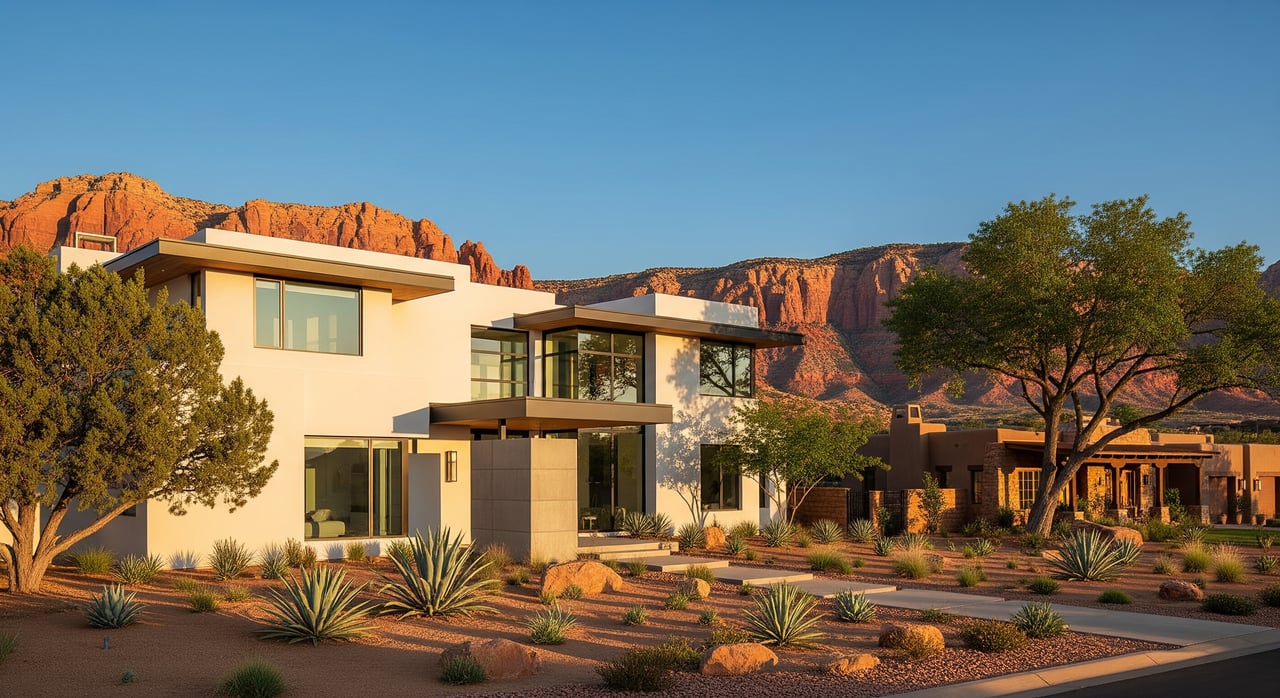
Thinking about buying a home in New Harmony but worried about the down payment? You might be closer than you think. USDA loans can offer 100% financing on eligible homes, which makes them a powerful option for rural communities like ours. In this guide, you’ll learn how USDA loans work, who qualifies in Washington County, how they compare to FHA and conventional loans, and the exact steps to get pre-approved. Let’s dive in.
USDA loans at a glance
USDA offers two main programs for single-family homes. Both are designed for primary residences in eligible rural areas and are generally fixed-rate.
- Section 502 Guaranteed Loan: You work with a USDA-approved lender. USDA guarantees a portion of the loan, which helps you qualify with no required down payment.
- Section 502 Direct Loan: USDA funds the loan directly for very low and low-income borrowers. Interest rates may be subsidized, and availability depends on funding.
To see the official overview of both programs, visit the USDA’s Single Family Housing page. It explains eligibility, fees, and current guidelines in one place. You can review it here: USDA Single Family Housing programs.
Who and what qualifies in New Harmony
Property location and type
USDA financing is available only for homes in areas the USDA defines as rural. Small towns like New Harmony often qualify, but eligibility is decided for each specific address. Always check the address on the official map before you shop or write an offer. Use the USDA property eligibility tool to verify any property.
Only primary residences are allowed. Investment properties and most vacation homes do not qualify. Single-family homes and certain attached homes may be eligible. Condos must meet USDA requirements. The home must be decent, safe, and sanitary. Homes needing major repairs may have to be fixed before closing.
Household income limits
USDA has household income limits that vary by county and household size. These limits help make sure the program serves low to moderate incomes. Use the USDA’s income tools for Washington County rather than relying on old numbers. You can access the most current limits through the USDA eligibility resource.
Credit, DTI, and underwriting basics
USDA underwriting can be more flexible than many conventional loans. Lenders look for a solid credit history, stable income, and a reasonable debt-to-income ratio. For Guaranteed loans, your lender underwrites using USDA guidelines. Direct loans follow USDA’s own underwriting rules and may include payment assistance based on income.
Other property factors in rural Utah
- Acreage: Large lots can be fine if the property is mainly residential. Parcels set up for commercial farming or income production may not qualify.
- Wells and septic: The home must meet local health and safety standards. Lenders may ask for water quality tests or septic documentation.
- Permits and additions: Non-permitted structures can delay or block financing until resolved.
USDA vs. FHA vs. conventional
Here is a simple way to compare your options:
USDA
- Pros: No required down payment for eligible buyers. Competitive fixed rates. Often lower ongoing fees than FHA’s mortgage insurance structure.
- Cons: Property must be in an eligible rural area. Household income limits apply. Habitability standards can be stricter than some conventional loans.
FHA
- Pros: Low down payment options. Can be more forgiving for some credit profiles.
- Cons: Mortgage insurance is required on every FHA loan and often lasts for the life of the loan unless you refinance. Learn more at HUD’s homebuying page.
Conventional
- Pros: Broad property type options, including higher-priced homes. Private mortgage insurance can be canceled when you reach sufficient equity, depending on loan terms.
- Cons: Usually higher credit and DTI standards. Down payment required unless you have special programs.
For a neutral, plain-language look at different mortgage types, review the CFPB’s mortgage guides.
How to get pre-approved in New Harmony
Before you shop
- Confirm property eligibility
- Check household income eligibility
- Use the USDA income tool for Washington County. Income limits update periodically, so check the latest figures before you apply.
- Choose Guaranteed vs Direct
- Most buyers use the Guaranteed program through an approved lender. If your income is very low, ask the Utah USDA office about Direct loans and availability: USDA Rural Development — Utah.
Documents to gather
Have these ready to speed up your pre-approval:
- Government ID and Social Security number
- Two years of W-2s and/or 1099s
- Recent pay stubs covering at least 30 days
- Federal tax returns if self-employed or with additional income sources
- Bank and asset statements, plus any gift letters for closing costs
- Rent payment history, if applicable
Lender process and your offer
- Pre-approval: Your lender will pull credit, review income and assets, and estimate your USDA-eligible price range.
- Home search: Focus on addresses confirmed on the USDA map. Ask your agent to double-check every listing before you tour.
- Offer: Include a USDA financing contingency if you plan to use this loan type.
From underwriting to closing
- USDA review: For Guaranteed loans, your lender submits the file to USDA as required. Direct loans are processed by USDA.
- Appraisal and condition: The appraiser checks value and basic safety items. Repairs may need to be completed before closing.
- Timeline: Closing timelines are similar to conventional loans. Extra time may be needed if repairs or document updates come up.
Local tips for New Harmony buyers
- Well and septic: Ask early about water testing, septic permits, and recent maintenance. This can save time during underwriting.
- Road access: Private roads and easements should be documented and usable year-round.
- Title details: Flag easements, rights-of-way, and any agricultural liens right away. Clear title helps avoid last-minute delays.
Ready to take the next step?
If you want a smooth USDA path, start with a focused plan. Verify addresses on the USDA map, organize your documents, and work with a lender who understands USDA guidelines. When you are ready, I can help you target USDA-eligible listings in New Harmony and introduce you to local lenders experienced with these loans. Reach out to Ciera Huha to get started.
FAQs
Is every home in New Harmony USDA-eligible?
How do I know if my income qualifies for a USDA loan in Washington County?
- Use the USDA’s income tool on the eligibility site for the most current limits and rules for your household size in Washington County.
Can I use a USDA loan for new construction in Southern Utah?
- Sometimes. USDA allows new construction in certain cases, but the builder and underwriting standards are stricter than for existing homes. Ask your lender about current requirements.
Can USDA loans cover closing costs?
- Sellers can contribute to your closing costs within program limits, and some costs may be financed if the appraised value allows. Gift funds are often acceptable. Confirm details with your lender.
How do USDA fees compare with FHA and conventional loans?
- USDA uses an upfront guarantee fee and a small annual fee that can be different from FHA’s mortgage insurance and conventional PMI. For current fee structures, see the USDA program overview and compare with HUD’s FHA resources.